Trade Show
Connect booth visibility, conversations and visitor takeaways.
Explore solutionCustomization
Start with the product, event application and brand identity. Then define the size, artwork, colors, configuration and other product-specific details needed to turn the project into a clear quotation brief.
The direct answer
Custom event products can be planned around size, shape, color, artwork, logo placement, material direction, product configuration, packaging and multi-product branding, depending on the selected product and project requirements.
The first decision is what the product needs to do. That determines which options are relevant and what information belongs in the project brief.
01 / Application
Application influences product selection, size, configuration, artwork, quantity, packaging and delivery planning.
Connect booth visibility, conversations and visitor takeaways.
Explore solutionPlan venue, participant and sponsor touchpoints together.
Explore solutionConsider sightlines, team identity and audience movement.
Shape the products around the interaction and setting.
Coordinate presentation, team and guest items.
Work back from recipients, distribution and campaign artwork.
The decision map
Ten questions organize a customization brief. Review the decisions that apply to each product; this is a planning framework, not a production sequence.
What are you customizing?
What physical format is required?
What product structure fits the application?
What brand or event colors are required?
What graphics need to appear?
Where should branding be visible?
What walls, panels, accessories or product options are required?
How should the product be presented or packed?
Does it need to coordinate with other products?
What quantity, event date, required delivery date and destination matter?
02 / Physical format
Size and shape mean different things across event products. Start with a preferred format or available space; the relevant category can guide the next decision.
No single set of dimensions applies to every category.
03 / Material direction
Material choices differ by category. Describe the appearance you want, the event environment and how the product will be used. Product construction, artwork method, reuse expectations, budget direction and packaging can then be considered in context.
Explore product categoriesCategory-specific product information is the next place to explore the available direction.
04 / Color
Share brand colors, Pantone references where available, campaign or event colors and sponsor requirements. Reference colors help coordinate the project.
Color appearance can vary between materials and printing processes. Reference colors support coordination; they do not guarantee exact cross-material matching.
05 / Artwork
A backdrop, flag, bag and medal have very different shapes and print areas. One master event identity may need several adapted artwork layouts.
Useful starting files include a vector logo, campaign graphics, sponsor logos, brand colors, reference layouts and any product-specific artwork. Read the Artwork Guide for file and layout guidance, then select any available files locally in the project RFQ. The form does not send files yet.
Adapt artwork to each format and print area.
06 / Logo placement
Choose placement according to viewing direction, product shape, event use and the available print area.
Branding method
The appropriate branding method depends on the product material, construction, artwork and project requirements. Methods that may be considered on suitable products include:
No single method is assumed to suit every product.
07 / Configuration
Configuration determines how the product works at the event. Define the physical setup alongside the graphics.
08 / Packaging
A project may call for individual packaging, bulk event distribution, gift presentation, multi-item sets, race packs or trade show giveaway sets.
Include packaging or grouping requirements in the RFQ so they can be evaluated with the selected products.
09 / Event system
Products are customized individually but experienced together. A common identity can connect venue visibility, the point of interaction and the items people take away.
Use one project brief to describe the shared identity and each product's own requirements.
Coordinated examples
These are optional project combinations that show how one identity can travel across different formats.
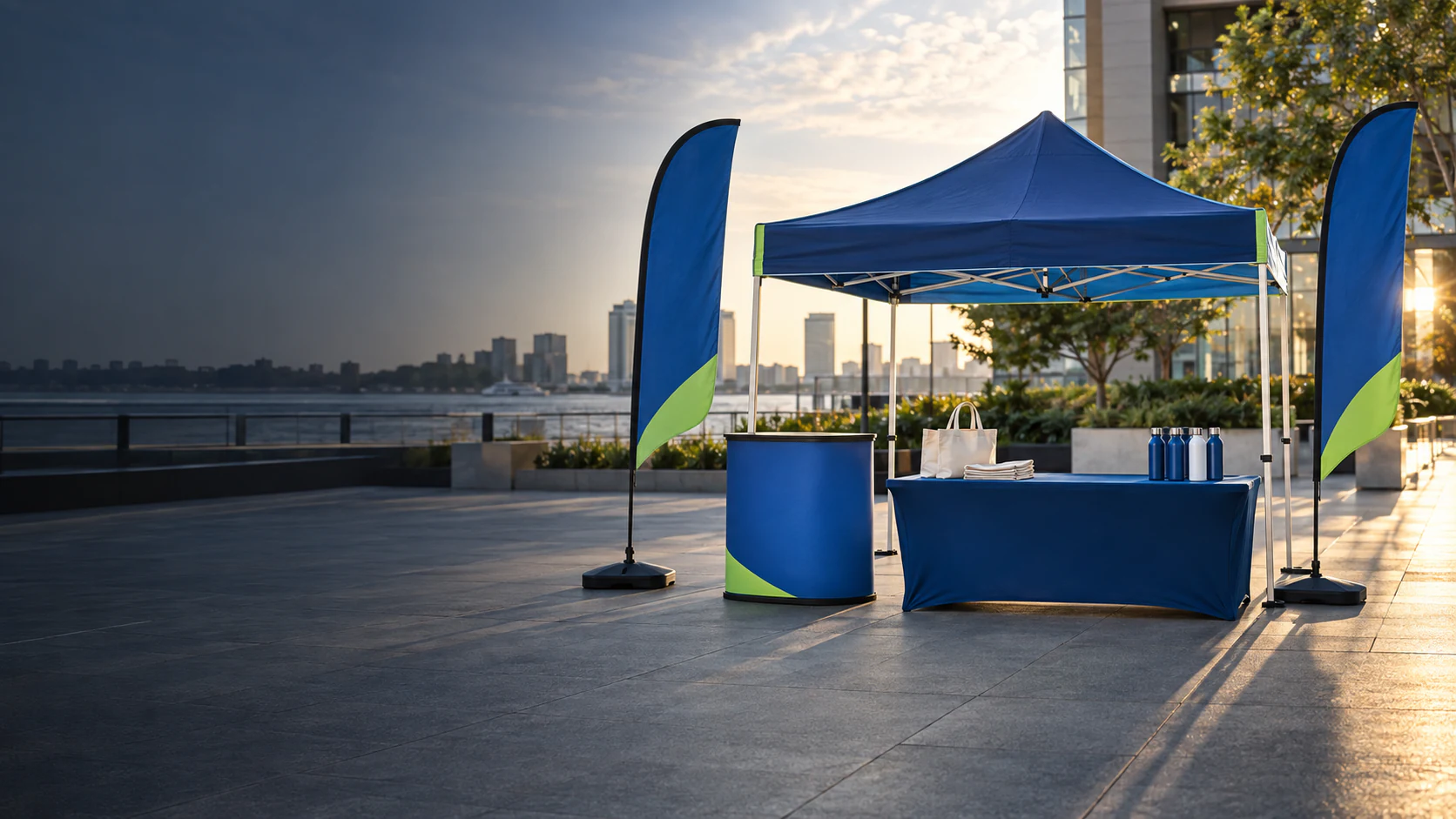
The same event logo and coordinated colors can connect the booth and takeaways. Artwork must be adapted to each format.
Explore Trade ShowsVenue markers, apparel and participant items can share event and sponsor references while keeping different sizes, placements and artwork layouts.
Explore Marathon Events10 / Project requirements
Bring the information you already have. The list helps identify the remaining questions; it is not a requirement to know every answer before making contact.
You can still start the RFQ and identify the unknown item as “Not Sure Yet.”
Start my custom projectChoose your scope
Either starting point can become a clear customization brief.
Start with a flag, bag, tent, display or apparel item and focus on its relevant decisions.
Explore productsPlan a trade show, marathon or brand activation as a coordinated set with product-specific requirements.
Explore solutionsCustomization by category
Each category has its own format and design questions. Open the category page to explore it further.
A clear boundary
Not every option applies to every product.
Customization is evaluated according to product construction, material, quantity, artwork, application and production requirements. The framework helps surface these questions before a direction is confirmed.
From first idea to inquiry
The first inquiry does not need every final specification. Explain what you know and mark the open decisions for review.
Quick answers
Answers to the questions buyers commonly need to settle before preparing an event branding brief.
Depending on the product, decisions may include size, shape, color, artwork, logo placement, material direction, configuration, packaging and coordination with other event products.
You can provide Pantone references where available to guide the color brief. Color appearance can vary between materials and printing processes, so an exact match across products is not assumed.
A master identity can connect the products, but a flag, backdrop, bag and medal have different shapes and print areas. Product-specific layouts may be needed.
Size and shape options depend on product construction and project requirements. Share your preferred format or dimensions so the relevant category options can be evaluated.
Include individual packing, bulk distribution, gift presentation or grouping needs in the RFQ. Packaging options can then be evaluated with the selected products.
Yes, a project brief can bring multiple products under one event identity while keeping each product’s format, artwork and configuration decisions distinct.
Useful references include a vector logo, campaign graphics, sponsor logos, color references and product layouts. AI, EPS, SVG, PDF and PNG files can help describe the artwork you have.
Yes. Start with the product, application and details you know, then identify an unknown item as “Not Sure Yet” in the RFQ.
About the project model
XZD Branding's project model is organized around coordinated event branding rather than isolated products. Learn how product choices, artwork and event requirements fit together.
Your next step
Tell us the product, event, quantity, artwork, colors and timing requirements you already have. If some specifications are still open, include the project context so the remaining options can be evaluated.