From booth to takeaway
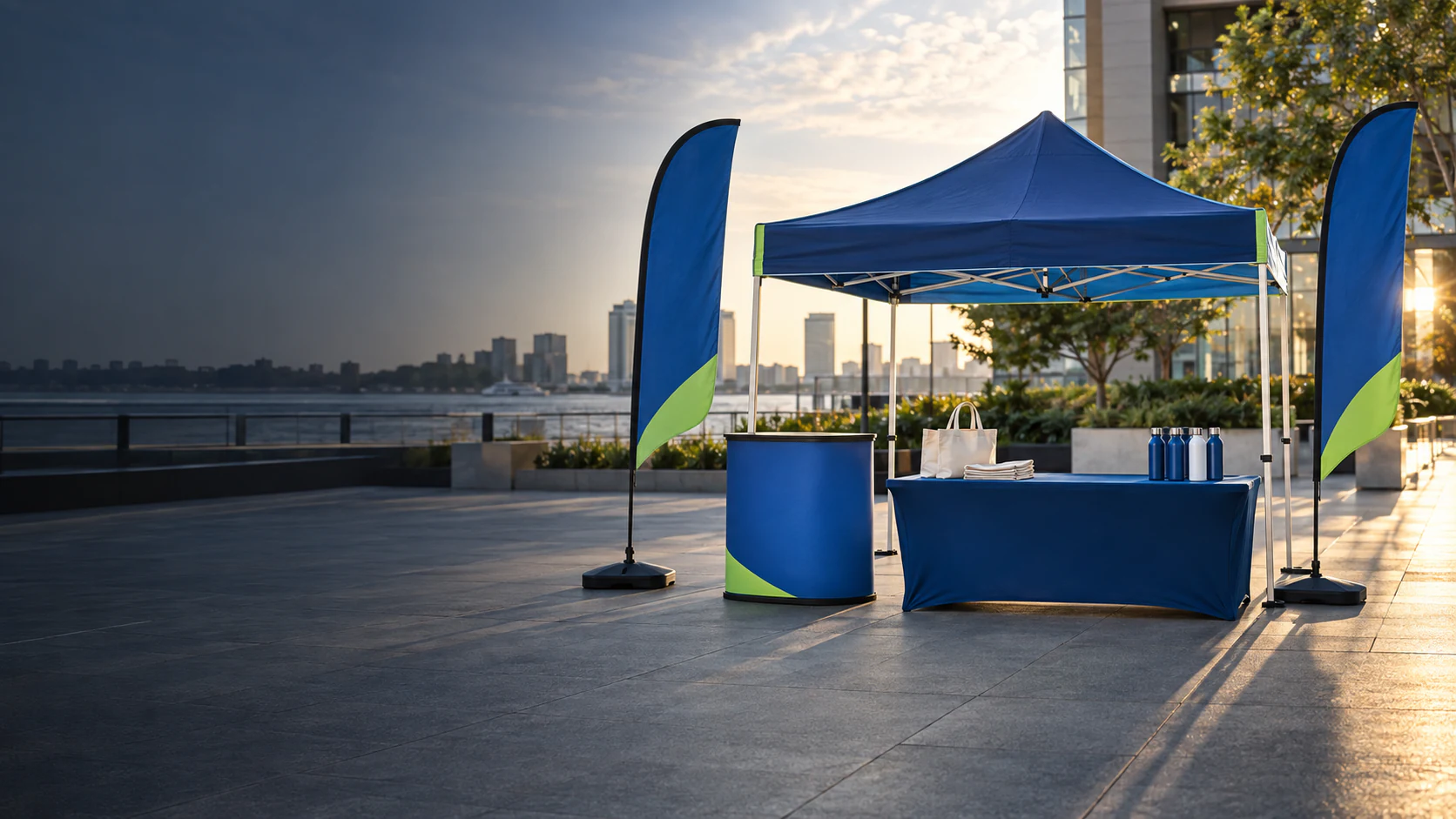
Trade show display, flags, table cover, staff apparel, promotional bags and giveaways.
Brief → product mix → artwork → specifications → production coordination → project control → event project → delivery
Explore trade showsHow it works
Start with the event, products and requirements you already know. XZD Branding helps organize the product mix, customization, artwork, specifications, production coordination and project requirements into one connected event-branding project.
The direct answer
XZD Branding acts as an event-branding sourcing partner for projects that may involve one product or several customized product categories. The process starts with the buyer's event requirements, then organizes product selection, customization, artwork, specifications, production coordination, project control and delivery requirements around one project brief. Each product keeps its own relevant details while the event context connects the decisions.
A practical starting point
Your first inquiry can include open questions. The aim is to make the known details and undecided details visible early.
“Not Sure Yet” is a valid RFQ status. Identify the question instead of guessing an answer.
Start with what I knowThe XZD project model
Nine connected stages, with product-specific decisions held together by the same event requirement.
01 / Share your event
Tell us the event type, event date, required delivery date and destination. Add product ideas, estimated quantity, artwork status and reference images where available. The event context makes the product questions more useful.
Why context matters
“A bag” is one product requirement. “A bag for a 3,000-participant marathon race pack” adds context that may affect its contents, artwork, quantities, packaging and delivery—and its relationship to apparel, medals, towels or event branding. That does not mean every project needs more products; it means the brief can reflect the actual use.
02 / Build the product mix
You may know the exact mix, or start with the event and define it during project clarification. A single item is just as valid a starting point.
Custom flag · custom bag · event apparel
Tent · flags · inflatable · bags · apparel · promotional products
Product mix by purpose
03 / Define customization
Review size or shape, color, material direction, artwork, logo placement, product configuration, packaging and related products according to the item and event use.
04 / Coordinate artwork
One identity may appear on a tent, flag, backdrop, table cover, bag, apparel, medal or promotional item. Layouts often need adapting to different dimensions, shapes, branding areas and materials.
Share a logo, vector artwork, Pantone references, sponsor logos, campaign graphics or reference layouts where available. Color appearance may vary across materials and processes.
Clarify early
It affects what still needs to be clarified for each product.
Need file-format and layout guidance? Use the Artwork Guide
05 / Confirm specifications
A shared event brief does not replace product-specific requirements. These examples show the questions to identify, not preset technical specifications.
Decision status
This is a project-management concept for discussing requirements—not a customer portal.
OpenA decision is still required.
ProposedA project direction is being evaluated.
ConfirmedThe relevant requirement has been agreed for the project.
06 / Coordinate production
Different event products may involve different materials, methods, specialized suppliers or production arrangements. XZD's role as a sourcing partner is to keep the confirmed requirements connected across the products in the project.
Coordination can include the product specification, artwork version, quantity, required date, packaging requirement and relationship to the wider event. The focus is one coordinated brief across the relevant production sources, not one factory for every product.
07 / Quality & project control
The purpose of checkpoints is to compare product and project outputs with their relevant confirmed requirements.
Focuses on an individual product against its relevant confirmed requirements.
Focuses on whether several products still align with the event: artwork version, quantity reference, configuration, packaging, project relationship and required delivery timing.
08 / Consolidate the event project
A multi-product project may start as separate requirements, but the buyer ultimately needs one coordinated event setup.
A direct answer
Shipment arrangements depend on product mix, production location, timing, destination, packaging and project requirements. If consolidated shipping matters, identify it during planning so it can be evaluated for that project. Project consolidation does not automatically mean physical warehouse consolidation.
09 / Delivery coordination
Share the destination country and delivery location, required delivery date, event date, product mix and any packaging or grouping requirement. Delivery planning is evaluated against the actual project scope; no freight mode, trade term or transit time is assumed in advance.
Plan backward
The plan works backward from when the products are actually needed—without assuming a universal number of weeks or days.
Timing question
Timing depends on product mix, quantity, customization, artwork readiness, production requirements, packaging, destination and the required event date. Provide both the event date and required delivery date early.
Project questions
The core process is similar, but coordination increases as more products are added.
One main specification set · one primary artwork application · fewer coordination points.
Several specification sets · artwork adapted across formats · different production requirements · more coordination points and project-level timing.
Event requirements, product ideas, quantity, brand assets, known specifications, timing requirements and destination.
Product configuration, open specifications, artwork application, product relationships, packaging and production requirements, and delivery arrangement.
Clear communication
Specific references reduce ambiguity when several products and artwork applications are being coordinated.
Version references
A simple naming convention keeps the agreed project reference clear. This is a communication concept, not an automated portal.
When details move
Changes should be identified as early as possible and evaluated against the current project stage and related products. A change in quantity, artwork, color, product, configuration, packaging or delivery requirement may affect production, timing, artwork or another coordinated item.
A planning check
Use this to surface open questions. It is a project-planning checklist, not a legal approval document or a prerequisite for first contact.
Illustrative project paths
Fictional examples show the relationships between products and decisions, not completed customer projects.
Trade show display, flags, table cover, staff apparel, promotional bags and giveaways.
Registration tent, flags, inflatable arch, participant bags, event apparel and medals or promotional items.
Project-level value
Without project-level coordination, a buyer may need to manage multiple product specifications and artwork layouts, different suppliers, production and packaging requirements, timelines and delivery arrangements. XZD Branding organizes those requirements around one event brief.
Coordination + clarity + project visibility
One connected model
Flags
Inflatables
Tents
Displays
Table covers
Apparel
Bags
Promotional products
The products may be different, but they need to support the same event, artwork system and timing requirement. That relationship—not a shared production source—is what connects the project.
Choose the right scope
Both approaches have a place. The useful choice depends on how many product and project decisions need to be connected.
Typically focused on one product, one specification set and one artwork application.
Useful when several categories, artwork applications, specifications and project-level coordination points are involved.
Where the model helps
The need becomes clearer when the event calls for products serving different functions at the same time.
Backdrop · flags · table cover · staff apparel · bags · giveaways
Explore solutionTents · flags · inflatable arch · participant bags · apparel · medals · promotional products
Explore solutionEvent branding · flags · inflatables · apparel · fan gear · giveaways
Displays · flags · bags · apparel · promotional products
Displays · table covers · staff apparel · gift / promotional products
Trust through transparency
Some responsibilities belong to the project model. Other details can only be determined from the actual products and requirements.
Project-dependent items should be evaluated and confirmed for the individual brief. This model does not promise lower cost, faster delivery, exact cross-material color matching or defect-free output.
From inquiry to scope
When a project brief is received, this is the intended clarification path—not a promise of an instant quotation or a fixed response time.
The RFQ form sends project details after you submit and confirms receipt only after the email is accepted for delivery. Selected artwork files remain on your device.
A practical example
The second brief gives the event context, product mix, quantities, artwork status, destination and timing needed for a useful project review.
“We need event products.”Fictional example · More useful
“We are organizing a trade show in Germany and need a 10×10 branded booth setup with a backdrop, table cover, two flags, staff shirts and 500 promotional bags. Artwork is available. Required delivery is before the event date.”
Find the right detail
These pages answer different questions, so you can go deeper without repeating the full process here.
Quick answers
Direct answers to the questions that most often affect a first project brief.
Start with the event brief: what the event is, which products may be needed, approximate quantities, artwork status, destination and required dates. Open details can be identified for clarification.
No. Share the products and requirements you know, and mark unresolved choices as “Not Sure Yet.” The product mix and open specifications can be clarified against the event brief.
No. A logo, colors, sponsor references or draft layouts are useful starting points. Identify the artwork status early because incomplete layouts affect what must still be clarified.
Each product keeps its own specification and artwork needs. XZD coordinates those references, quantities, timing and project-level readiness around the same event brief.
Relevant choices are treated as open, proposed or confirmed. The agreed project reference should identify the product configuration, artwork version, quantity and other applicable requirements.
Not necessarily. Different product categories may require different specialized production sources or manufacturing arrangements. XZD coordinates the relevant product requirements within the overall event-branding project.
Not necessarily. Shipment arrangement depends on the product mix, production timing, destination, packaging and project requirements. Consolidated shipping should be raised during planning if it matters.
There is no universal lead time. Timing depends on the products, quantities, customization, artwork readiness, production requirements, packaging and destination. Share the event and required delivery dates early.
Raise the change as early as possible. It should be evaluated against the current project stage and any related products, artwork, packaging, production or delivery requirements.
Include the event type, product ideas, estimated quantities, artwork status, destination, event date and required delivery date. Add reference images and mark open choices rather than guessing.
Start your project
Share the event, product ideas, quantities, artwork status, destination and timing requirements you already know. If part of the product mix or specifications is still open, identify it so the requirements can be clarified as the project develops.
Submit your project details through the RFQ form. Selected artwork files are not uploaded and can be requested separately.